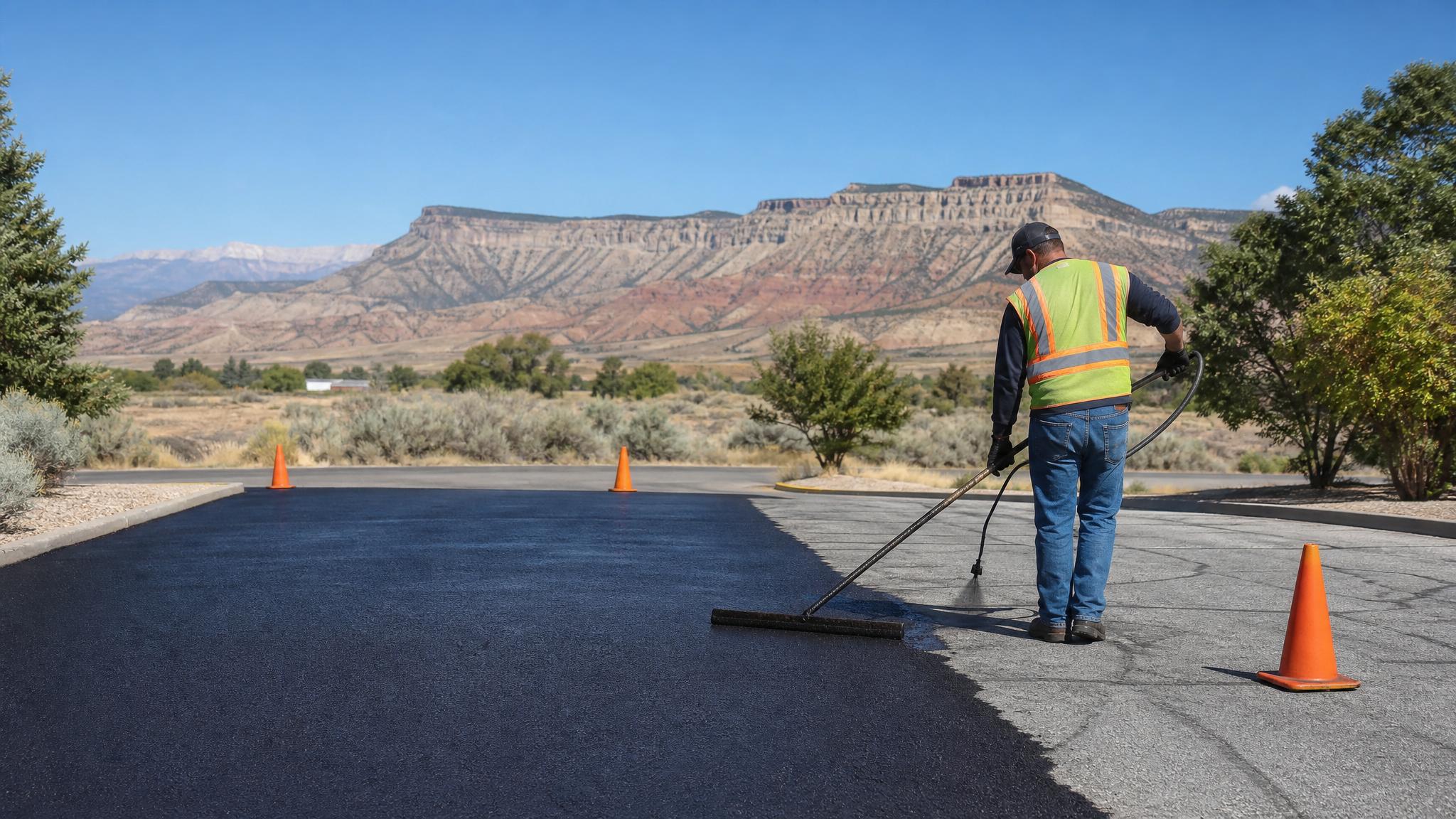
What sealcoating does
- Helps protect asphalt from UV exposure, moisture, oil, and surface wear.
- Refreshes appearance and can be paired with crack sealing and striping on commercial lots.
Grand Junction's high-desert sun is the main reason sealcoating matters here more than it might in a cloudier climate. Intense UV exposure oxidizes the asphalt binder over time, drying it out and making the surface more brittle. A brittle, oxidized surface develops fine cracks faster, and once winter freeze-thaw cycles start moving water in and out of those cracks, small surface wear can turn into structural damage within a few seasons. Sealcoat acts as a wearing layer that slows UV oxidation and helps keep water, oil, and gas from soaking into the surface between paving or overlay cycles.
What sealcoating does not do
It does not fix base failure, major potholes, severe alligator cracking, or drainage problems. Repairs may be needed before sealcoat.
Better sealcoat leads
Larger driveways, parking lots, HOA areas, property-managed lots, and commercial maintenance bundles are generally more practical to schedule than tiny DIY-style requests.
Commercial maintenance steps before sealcoat
Sealcoating is strongest when the lot has already been reviewed for crack sealing, pothole repair, and asphalt repair. If the surface is worn beyond maintenance, compare resurfacing and overlay before scheduling parking lot striping.
Sealcoating vs. a chip seal or new overlay
See the full chip seal vs. asphalt paving comparison for how a chip seal stacks up against sealcoat and full asphalt on longer private roads and ranch lanes.
Property owners sometimes ask whether sealcoating, a chip seal, or a full asphalt overlay is the right call. Sealcoating is a thin protective coating meant for asphalt that is still structurally sound; it is the least expensive option per square foot but only addresses surface protection and appearance, not strength. A chip seal, more common on rural Western Colorado roads and long private lanes than on tight commercial lots, embeds stone chips into a binder to add wear resistance and skid friction at a lower material cost than new asphalt, but it produces a rougher finish and is usually a poor fit for striped parking or driveways where a smooth surface matters. A full overlay costs more upfront than either option but resets the wearing surface and restores structural life when cracking or rutting has gone beyond what a coating can address. The right choice usually comes down to current surface condition, budget cycle, and how much service life the property owner needs out of the next maintenance step.
Building a sealcoat maintenance cycle
Commercial properties and HOAs on the Western Slope often get more value from sealcoating when it is planned as part of a recurring cycle rather than a one-time job. A typical sequence starts with an inspection to flag cracks, potholes, and drainage trouble, moves into crack sealing and any needed patching, then applies sealcoat once repairs have cured, and finishes with restriping once the coating has set. Spacing that cycle out over a few years and budgeting for it in advance is usually more predictable than waiting until surface wear becomes visible from the street.