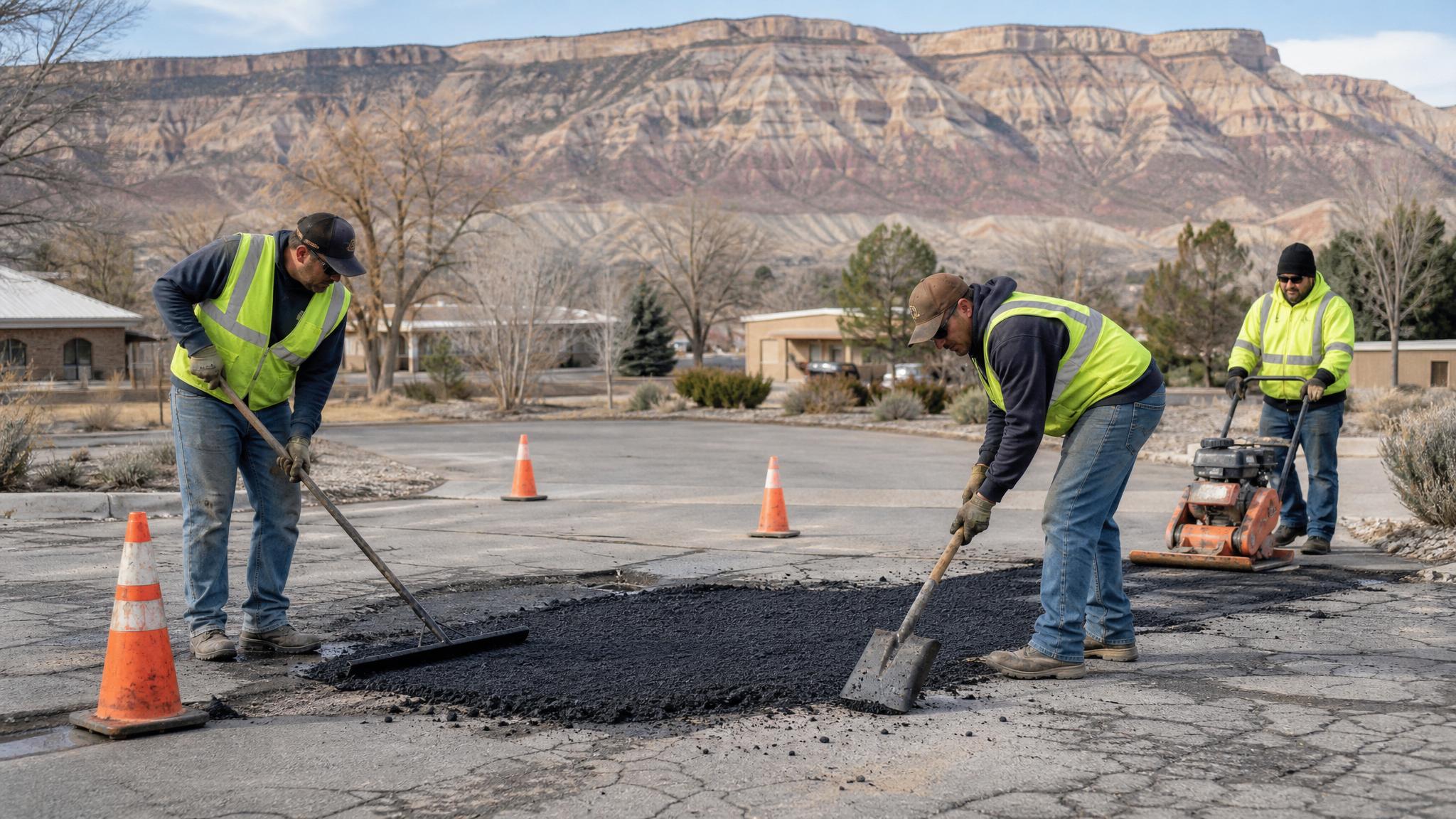
Common asphalt problems
Potholes, alligator cracking, failed edges, sinking or low areas,
loose pavement, utility cuts, water damage, and surface deterioration.
Repair methods a contractor may consider
- Pothole patching
- Full-depth repair
- Crack sealing
- Edge repair
- Drainage correction before patching
- Resurfacing or replacement when repair is not enough
Repair vs resurfacing vs replacement
Isolated damage may be repairable. Widespread cracking, base failure,
repeated potholes, or drainage problems may require resurfacing or
replacement. Photos help, but a site visit is usually needed.
Repair pages that help narrow the scope
For a single hole or failed patch, start with
pothole repair. For
open cracks before water gets underneath the surface, review
crack sealing. If the
damage covers a larger parking area, compare
resurfacing and overlay
with
commercial parking lot paving
and
parking lot maintenance.
Frequently asked questions
Can potholes be patched permanently?
A pothole patch can last when the damaged material is removed, the
base is stable, drainage is corrected, and the patch is compacted
properly. If water, weak base, or surrounding cracking remains, the
pothole may return.
What is alligator cracking?
Alligator cracking is a pattern of connected cracks that looks like
scales. It usually points to base failure, fatigue, poor drainage, or
repeated heavy loading, and it often needs more than surface sealcoat.
Is crack sealing the same as asphalt repair?
No. Crack sealing fills narrow cracks to reduce water intrusion and
slow deterioration. Asphalt repair can include patching, saw-cut
repairs, pothole repair, milling, overlay, or replacement depending on
the damage.
When should asphalt be replaced instead of patched?
Replacement should be considered when damage is widespread, the base
is failing, drainage is poor, edges are breaking down, or repeated
patches are no longer holding. Isolated damage may still be a good
repair candidate.
Can commercial repairs be scheduled after hours?
Many commercial asphalt projects can be planned around business hours,
tenant access, deliveries, and customer traffic. After-hours or phased
work depends on project scope, noise limits, lighting, crew
availability, and site safety.
Repair vs resurfacing vs replacement
Many asphalt repair searches start with a pothole or cracked area, but
the real question is whether the pavement has a surface problem or a
base problem. A better repair page should help owners understand that
difference before asking for a quote.
-
Isolated potholes or utility cuts may be candidates for patching or
full-depth repair.
-
Long cracks may need crack sealing before water reaches the base.
-
Widespread alligator cracking usually points to base failure, not a
cosmetic repair.
-
Parking lot safety issues may need faster scheduling than cosmetic
driveway repairs.
-
Repeated potholes in the same area may indicate drainage or sub-base
problems.
This page should help prepare better estimate requests by asking for photos, property
type, damage size, whether vehicles are currently affected, and
whether the owner is open to resurfacing or replacement if patching is
not enough.
Photos that help clarify asphalt repair scope
Photos make asphalt repair requests easier to review. Useful photos
include close-ups of potholes or cracks, a wide view of the driveway
or lot, low spots after rain, failed edges, and any area where
vehicles scrape, sink, or avoid the pavement.
Common repair scenarios
- Driveway edge failure near the street or garage.
- Commercial potholes in drive lanes or customer parking areas.
-
Utility cuts or patches that settled lower than the surrounding
asphalt.
-
Cracks that let water into the base before freeze/thaw cycles.
-
Worn pavement where overlay may be more cost-effective than repeated
patching.
Repair leads should be reviewed differently depending on whether the
property is residential, commercial, HOA, municipal, or
property-managed.