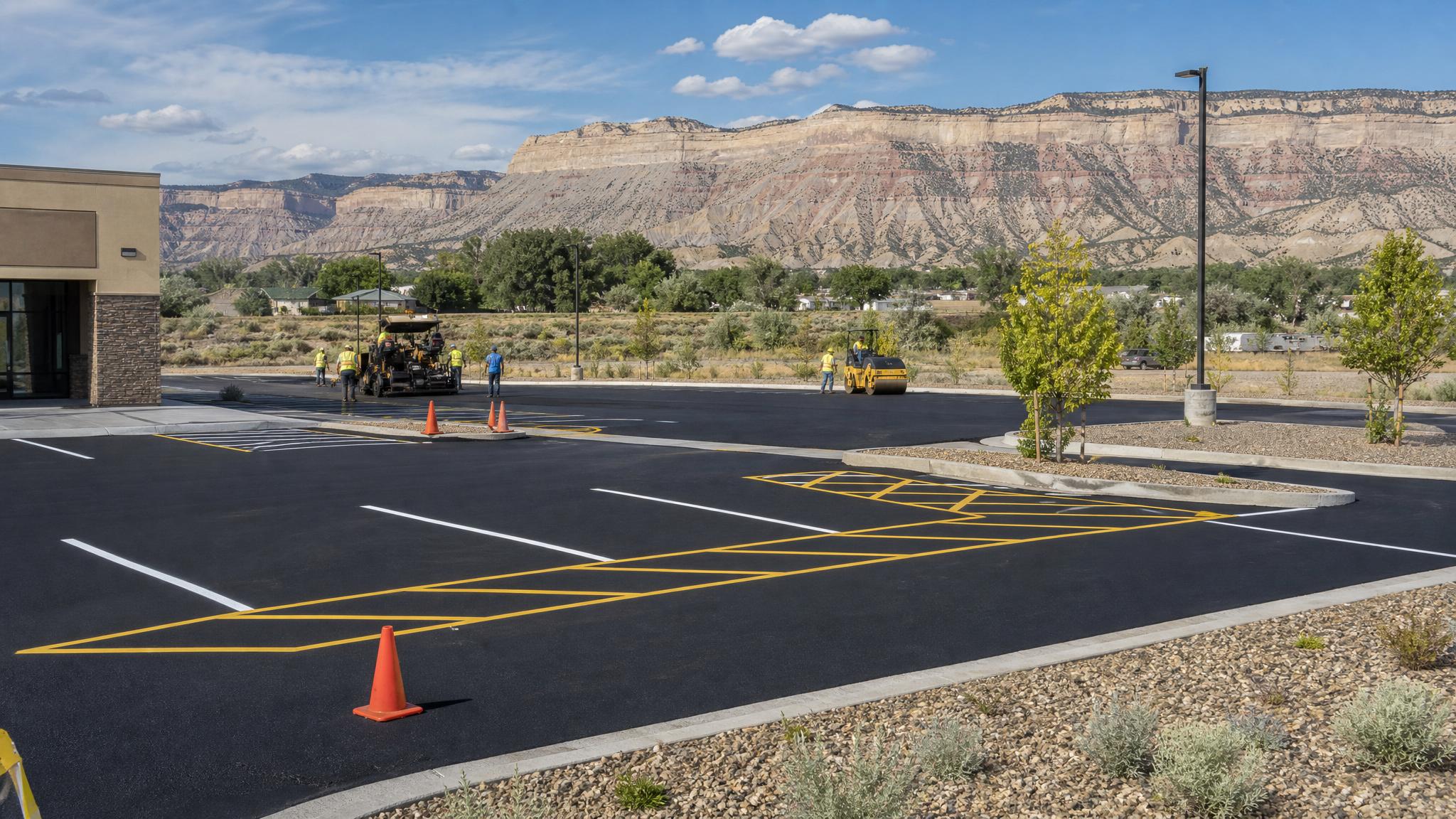
Why asphalt pricing varies
Square footage, demolition, base condition, grading, drainage,
thickness, access, edges, mobilization, timing, commercial phasing,
and striping can all affect scope.
Driveway cost factors
Existing surface, base prep, compaction, drainage, width, length,
garage transitions, culverts, edges, and whether old pavement must be
removed.
Commercial parking lot cost factors
Lot size, customer access, phasing, base failure, milling,
striping/ADA coordination, drainage, patching, overlays, and
scheduling constraints.
Why the lowest bid can cost more
If base preparation, compaction, drainage, or thickness are
under-scoped, the pavement may fail sooner. A site visit is the right
way to compare scopes.
Use cost planning to narrow the estimate request
A cost page is most useful when it helps you describe the work
clearly before asking for a quote. Start with the
Grand Junction asphalt cost calculator
for a rough planning range, then use the
asphalt paving estimate page
to organize the project type, photos, timing, access notes, and
decision-maker details.
Match the budget conversation to the likely scope:
driveway paving,
commercial parking lot paving,
pothole repair,
resurfacing or overlay, or
parking lot maintenance. The same square footage can price differently when old pavement
removal, base repair, drainage correction, traffic control, or phased
business access is part of the job.
Use nearby service-area pages to compare scope
A Grand Junction asphalt paving cost discussion is stronger when the
property context is clear. Projects in
Palisade,
Fruita,
Clifton, Orchard Mesa,
Redlands, and nearby Western Slope communities can have different
access, drainage, phasing, and haul considerations even when the
requested square footage is similar. Review the relevant
Grand Junction service area
page, then use the
asphalt paving estimate request page
to submit the city, surface condition, project type, photos, and
timing notes in one place.
Frequently asked questions
What affects asphalt driveway cost?
Driveway cost is affected by size, tear-out, base preparation, asphalt
thickness, drainage corrections, access, slope, haul distance,
transitions, and whether the project is new paving, overlay, or full
replacement.
Why do parking lot paving bids vary so much?
Parking lot bids vary because contractors may price different scopes:
patching versus overlay versus reconstruction, milling, base repair,
drainage work, striping, traffic control, phasing, and asphalt
thickness.
Is overlay cheaper than replacement?
Overlay is usually cheaper than replacement because it avoids full
removal and base reconstruction. It is only a good value when the
existing pavement and base are solid enough to support a new asphalt
layer.
Does sealcoating repair damaged asphalt?
Sealcoating protects and refreshes the surface, but it does not repair
potholes, base failure, deep cracks, drainage problems, or structural
pavement damage. Repairs should happen before sealcoat is applied.
What details should I include when requesting an estimate?
Include the property address or city, project type, approximate
dimensions, current surface condition, photos, drainage concerns,
timeline, access limits, and whether you need paving, repair, overlay,
sealcoating, or striping.
Why this cost guide avoids generic exact prices
Some asphalt cost pages publish broad ranges that may not reflect the
actual site. For Grand Junction paving, a trustworthy estimate should
account for base prep, drainage, demolition, access, material
thickness, traffic load, mobilization, commercial phasing, and whether
the job is paving, repair, resurfacing, sealcoating, or striping.
-
A small patch and a commercial overlay are completely different
scopes.
-
A driveway with poor drainage can cost more than a larger driveway
with a solid base.
-
Parking lots may need patching, milling, striping, ADA layout, and
phased work.
-
Sealcoating is maintenance, not structural paving or base repair.
The best next step is to submit the project details and request a
site-specific estimate. Photos and approximate dimensions help a
contractor understand the scope, site conditions, and schedule.
Cost-driver table
| Project type |
Main cost drivers |
Best details to submit |
| Driveway paving |
Size, base, drainage, demo, thickness, transitions |
Length/width, current surface, photos, timeline |
| Commercial lot |
Square footage, phasing, traffic, base failure, striping/ADA
|
Lot size, business hours, photos, repair areas |
| Repair/potholes |
Damage depth, count, base condition, access, mobilization |
Photos, number/size of potholes, urgency |
| Overlay/resurfacing |
Existing pavement condition, milling, transitions, drainage
|
Surface photos, age, cracks, low spots |
| Sealcoat/striping |
Lot/driveway size, crack sealing, layout, traffic control |
Area size, current condition, striping needs |
Why a site visit usually matters
Asphalt pricing can change quickly once a contractor sees drainage,
base failure, access, edges, and demolition needs. A site-specific
estimate is more useful than a generic online price range.