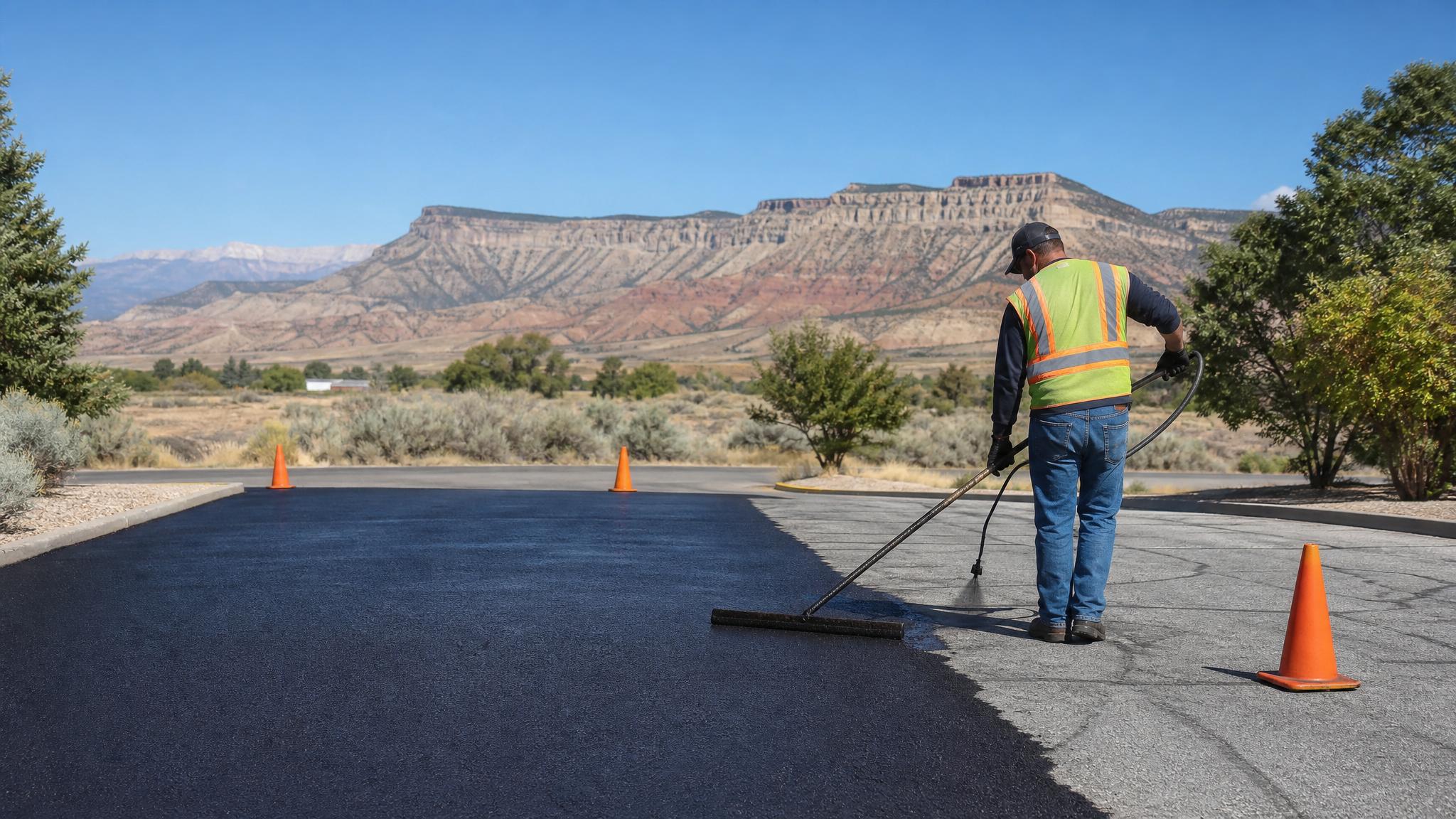
Why parking lot maintenance matters
A rough lot affects customers, tenants, safety, liability, curb appeal, and water management. Small problems can become larger repairs when ignored.
Common maintenance services
- Crack sealing
- Pothole repair and patching
- Sealcoating
- Striping coordination
- Drainage issue review
- Annual inspection and maintenance planning
Why Grand Junction lots need a maintenance schedule, not just repairs
Western Colorado's climate is hard on parking lots in two directions at once. Intense high-desert sun oxidizes the asphalt binder through the summer, drying and stiffening the surface, while winter freeze-thaw cycles push meltwater into any crack that has already opened up and pry it wider every time it refreezes. A lot that only gets attention when a pothole appears is usually reacting to damage that has already been building for one or two seasons. A planned maintenance schedule catches that damage while it is still a crack-sealing or sealcoating job instead of a patching or resurfacing job.
Chip seal, sealcoat, or overlay: matching the fix to the wear
Not every maintenance dollar buys the same thing. Sealcoating is the least expensive option and protects a structurally sound surface from UV and moisture, but it will not add strength or fix cracking. A chip seal, more common on long private access roads than on striped commercial lots, trades a rougher finish for lower material cost and added skid resistance. A full resurfacing or overlay costs the most upfront but resets the wearing surface when cracking, rutting, or repeated patch failures have gone beyond what a coating can address. Matching the right fix to the actual wear level is usually what keeps a maintenance budget from being spent twice on the same problem.
When maintenance is no longer enough
If the lot has widespread cracking, failed base, repeated potholes, or drainage trouble, resurfacing or reconstruction may be smarter than repeated patching.
Building a seasonal maintenance plan
Property managers and HOA boards on the Western Slope generally do best with a maintenance plan tied to the seasons rather than a reactive one. Late winter and early spring are a good time for a walk-through inspection to flag cracks and low spots left by snow and ice. Spring through early fall is the workable window for crack sealing, pothole patching, sealcoating, and restriping, since asphalt materials need dry conditions and workable temperatures to cure properly. See the parking lot maintenance calendar for a month-by-month breakdown.
Maintenance work to group before requesting pricing
A complete parking lot maintenance request should mention whether the lot also needs pothole repair, crack sealing, sealcoating, striping, or resurfacing. Bundling the condition details helps separate simple maintenance from larger commercial paving work.