Grand Junction, the Grand Valley, and nearby Western Slope
communities asphalt estimate help
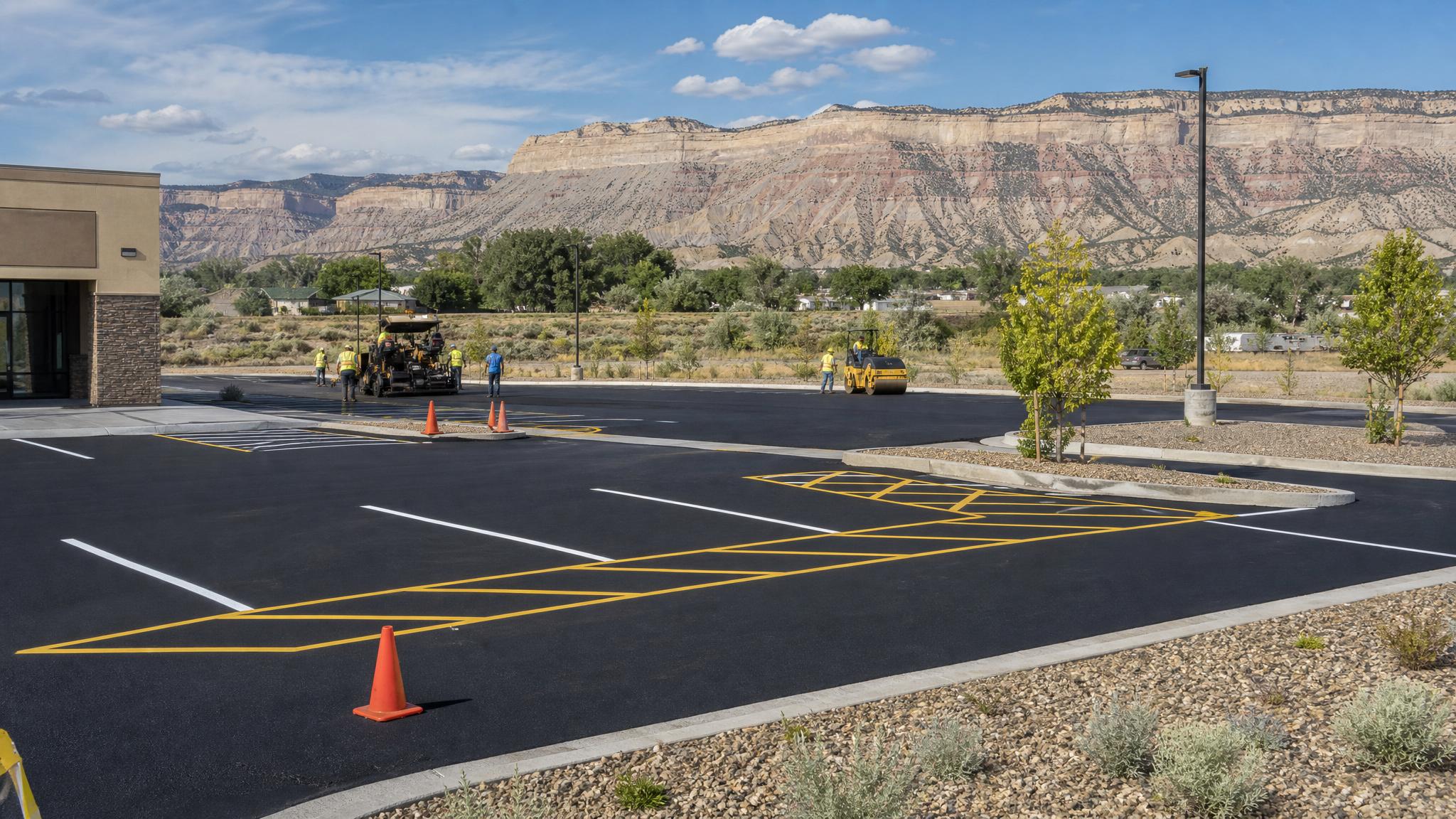
Commercial Parking Lot Paving in Grand Junction, CO
Request a commercial asphalt paving estimate for parking lots,
overlays, reconstruction, repairs, and maintenance planning around
Grand Junction, the Grand Valley, and nearby Western Slope
communities.
Clear asphalt paving, repair, and maintenance estimate requests for
Grand Junction, the Grand Valley, and nearby Western Slope
communities — project details, photos, timing, and location in one
place.
Projects may include new lots, reconstruction, overlays, expansions,
pothole repair, crack sealing, sealcoat, and striping coordination.
Planning considerations
Traffic flow, customer access, delivery routes, and whether the
property needs to stay open during work
Phased work to reduce disruption for tenants, employees, customers,
residents, or HOA traffic
Drainage, base condition, ADA coordination, striping, and tenant
communication
Safety issues such as potholes, failed edges, standing water, and
trip hazards
Budget approval details such as lot size, photos, current surface
condition, preferred timing, and whether the work is repair,
overlay, resurfacing, or new paving
Repair, overlay, or replacement
A contractor should inspect the pavement condition before recommending
patching, overlay, milling, or full reconstruction. The cheapest
option is not always the lowest-cost option if the base or drainage is
failing. Repeated potholes in the same area, standing water, edge
failure, heavy truck traffic, or alligator cracking can point to a
deeper pavement problem than the visible surface damage.
Commercial lot work that often belongs in the same estimate
Property manager scope notes before requesting bids
Property managers, HOA boards, and business owners can usually get a
clearer commercial paving estimate when the request separates
immediate safety problems from longer-term capital planning. A lot
with active potholes, broken edges, and standing water may need
targeted pothole repair
or drainage correction before an
overlay or resurfacing decision
makes sense. A lot that is structurally sound but weathered may be
better planned around
sealcoating,
parking lot maintenance, and striping timing.
Before asking for a commercial parking lot paving bid, gather the
approximate square footage, number of stalls, photos of the worst
pavement, truck or delivery routes, tenant access needs, preferred
work windows, and any ADA, dumpster pad, drainage, or fire-lane
concerns. The
asphalt cost calculator,
cost guide, and
estimate request page
can help organize those details before a contractor compares new
paving, mill-and-overlay, full-depth repair, phased reconstruction, or
commercial asphalt maintenance.
The project details are reviewed for scope, access, timing, and completeness.
After the scope, site details, and schedule are clear, the next
step is a site-specific estimate discussion.
After scope details and schedule are confirmed, the last step is final pricing and completed work.
Frequently asked questions
Can a parking lot be paved in phases?
Yes. Commercial lots are often paved or repaired in phases so
customers, tenants, employees, and deliveries can still access the
property. Phasing should be planned around traffic flow, striping,
safety, and business hours.
When does a lot need full replacement instead of overlay?
Full replacement is more likely when the lot has widespread base
failure, severe alligator cracking, standing water, repeated potholes,
or poor drainage. An overlay is better suited to structurally sound
pavement with surface wear.
Do paving estimates include striping?
Some parking lot estimates include striping or coordinate it as part
of the project, especially after overlay, sealcoat, or new paving.
Striping details should include stall layout, ADA spaces, arrows, fire
lanes, and timing.
How should property managers prepare for paving?
Property managers should gather lot size, photos, problem areas,
access needs, tenant schedules, delivery routes, ADA concerns,
drainage issues, and preferred work windows before requesting a
site-specific estimate.
What causes potholes and edge failure in commercial lots?
Common causes include water intrusion, freeze-thaw movement, weak
base, heavy traffic, poor drainage, failed patches, thin pavement, and
unprotected edges. Repair should address the cause, not just the
visible hole.
Commercial parking lot paving details property owners should review
Commercial asphalt in Grand Junction is not just “paving.” A useful
parking lot estimate should consider customer access, delivery
traffic, ADA layout, drainage, base condition, phasing, striping
coordination, and whether the business needs to stay open during work.
Retail centers and restaurants may need phased paving to keep
customer parking open.
Apartment, HOA, church, school, and office lots often need
communication around access and timing.
Industrial yards and warehouses may need thicker asphalt sections or
stronger base preparation for truck traffic.
Failed lots may need full-depth patching or resurfacing before
sealcoat or striping makes sense.
For higher-value commercial requests, include photos, approximate lot
size, problem areas, preferred timing, and whether the property needs
paving, overlay, pothole repair, sealcoating, striping, or a
maintenance bundle.
Commercial estimate checklist
For a parking lot paving estimate in Grand Junction or nearby Western
Slope communities, the most useful requests include enough detail for
a contractor review scope, site conditions, and schedule before pricing
a site visit.
Approximate lot size or number of parking spaces.
Whether the lot needs new paving, overlay, pothole repair, sealcoat,
crack sealing, striping, or full reconstruction.
Photos of failed edges, potholes, cracks, standing water, drainage
paths, and existing striping.
Business hours, access restrictions, tenant/customer traffic, and
whether work needs to be phased.
Any ADA, fire lane, delivery route, dumpster pad, or heavy-truck
traffic concerns.
Commercial properties that commonly need asphalt work
Parking lot paving requests may come from retail centers, restaurants,
office buildings, warehouses, churches, schools, apartment complexes,
HOAs, industrial yards, medical offices, storage facilities, and
property-management portfolios.
Because commercial asphalt can affect safety, access, and curb appeal,
larger lot repair and resurfacing projects are usually stronger leads
than small cosmetic maintenance requests.
Request asphalt paving help in Grand Junction
Share the project type, city, timeline, current surface condition, and
photos if available.