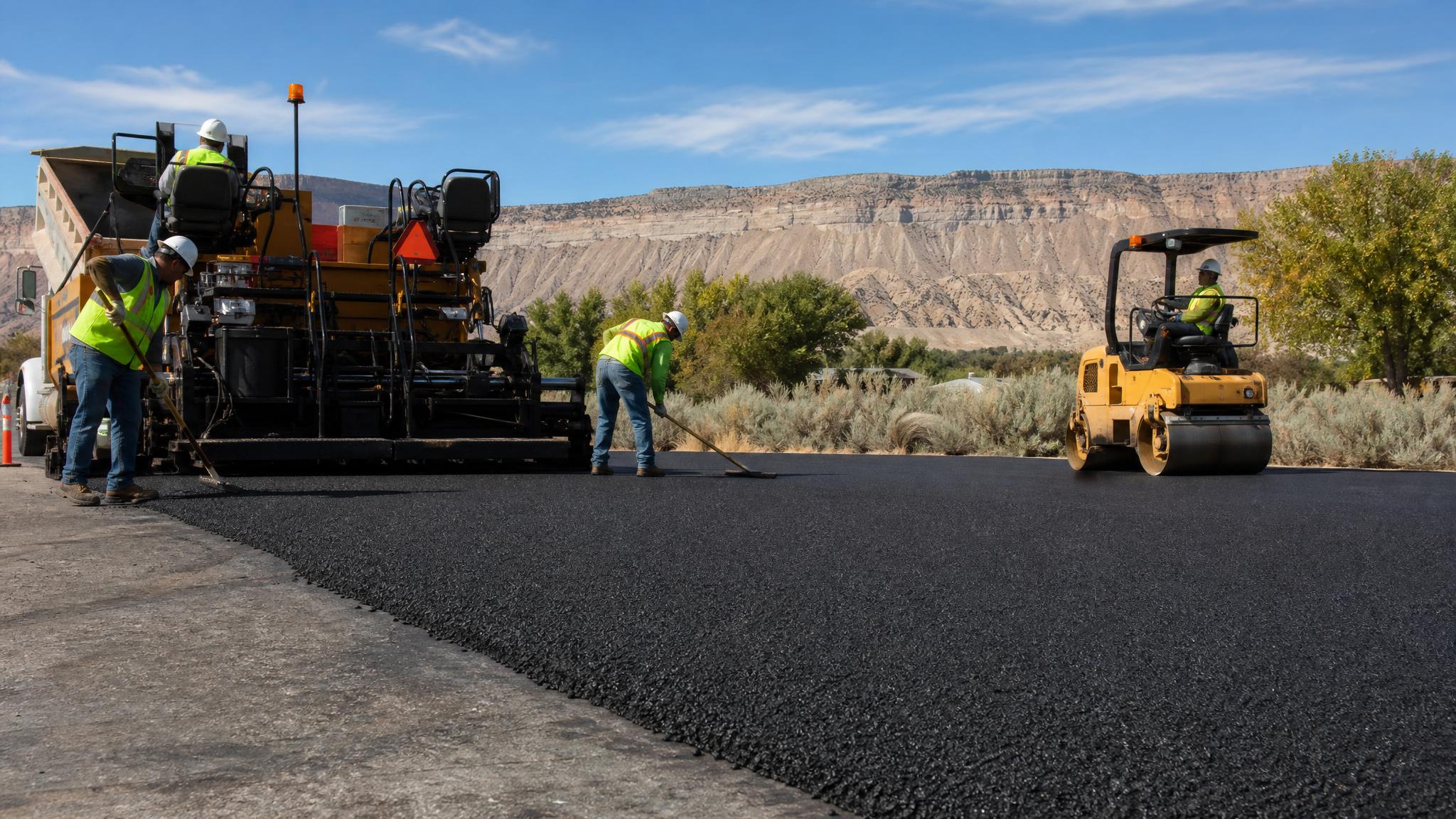
When resurfacing can make sense
The base is stable, drainage is manageable, and the main issue is
surface wear, oxidation, or limited cracking.
When overlay may not be the right scope
Severe alligator cracking, base failure, deep potholes, drainage
problems, bad grades, or edge failure may require repair or
replacement before overlay.
Commercial and residential overlay details
Milling, edge transitions, curbs, garage aprons, ADA/striping
coordination, and drainage should be reviewed before choosing an
overlay scope.
Related commercial lot checks before overlay
Before requesting an overlay, note whether the site also needs
pothole repair,
crack sealing,
parking lot maintenance, or
striping. If
the base, drainage, or edges have failed across the lot, full
commercial parking lot paving
may need to be discussed instead.
Frequently asked questions
Is resurfacing cheaper than replacement?
Resurfacing is usually less expensive than full replacement because it
keeps the existing base in place. It only makes sense when the base is
stable and drainage problems are not causing the surface failure.
How long does an asphalt overlay last?
A properly installed overlay can last for years, but lifespan depends
on traffic, drainage, existing pavement condition, preparation,
thickness, maintenance, and whether cracks or base failures were
corrected first.
Can you overlay cracked asphalt?
Some cracked asphalt can be overlaid after cleaning, repair, milling,
or leveling. Widespread alligator cracking, soft spots, failed base,
or drainage issues usually need deeper repair before an overlay is
considered.
Does resurfacing fix drainage issues?
Resurfacing can improve minor surface irregularities, but it does not
automatically fix poor slope, standing water, failed base, or
structural drainage problems. Those issues should be reviewed before
overlay work.
Is milling needed before an overlay?
Milling may be needed when transitions, curb height, drainage, doors,
utility covers, or existing surface condition require material removal
before new asphalt is placed. Some simpler overlays may not need
milling.
When overlay is the better lead than patching
Resurfacing and overlay requests can be high-value because the owner
already knows the pavement looks worn but may not need full
reconstruction. The key is whether the base is stable enough to
support a new asphalt layer.
-
Good overlay candidates often have oxidation, surface wear, minor
cracking, and manageable drainage.
-
Poor candidates often have deep potholes, severe alligator cracking,
base movement, drainage failures, or elevation problems.
-
Commercial overlays may need milling, transitions, striping
coordination, ADA review, and phased access planning.
-
Driveway overlays may need attention to garage aprons, edges, water
flow, and existing thickness.
Estimate requests should include whether the pavement has widespread
cracks, low spots, drainage issues, edge failure, or prior patching.
Overlay estimate checklist
For resurfacing and overlay requests, photos and pavement history
matter. A contractor may need to know how old the pavement is, whether
it has been patched before, whether water drains properly, and whether
the base appears stable.
-
Share photos of cracks, low spots, transitions, curbs, garage
aprons, and failed edges.
-
Note whether the project is a driveway, private lane, parking lot,
or commercial property.
-
Describe whether the surface is oxidized and worn or structurally
broken.
-
Mention if vehicles scrape at transitions or if a new layer could
create height issues.
Overlay is not a cover-up for base failure
A good resurfacing page should be clear: overlay can renew a stable
pavement surface, but it will not permanently fix deep base movement,
drainage failure, severe alligator cracking, or large areas of failed
asphalt.